
Field Notes · July 8, 2026 · 6 min · By Edmund Carvalho
Waxing and ingrown hairs: why the regrowth gets trapped, and the aftercare that prevents it
Waxing skips the sharp shaved tip but sets its own trap. The two weeks after the appointment decide whether bumps follow.
Waxing is often pitched as the escape route for people who get razor bumps, and the logic sounds airtight: no blade, no sharp cut tip, no ingrown. The reality is messier. Waxed skin absolutely gets ingrown hairs, they just arrive on a different schedule and by a different mechanism, and the habits that prevent them are mostly about what happens in the two weeks after the appointment, not during it.
Why waxed hair still ingrows. Shaving leaves a sharpened tip at the surface; waxing pulls the hair out at the root, so the new hair has to travel the full length of the follicle and pierce the skin from below. That regrowing hair is fine, tapered, and weak, and if a cap of dead skin cells has built up over the follicle opening, the tip buckles and curls sideways under the surface instead of breaking through. Waxing can also snap hairs off mid-shaft rather than extracting them, and a broken hair below the surface behaves much like a shaved one. Add the follicle distortion that repeated pulling causes and you have the same trap that produces every ingrown, just set two to three weeks later, when the regrowth reaches the surface (MedlinePlus, National Library of Medicine).
Reading the timeline. Bumps that appear within a day or two of waxing are usually not ingrowns at all; they are irritated or transiently infected follicles reacting to the trauma of the pull, and they typically settle within a few days with clean skin and loose clothing (MedlinePlus). True post-wax ingrowns show up one to three weeks later, as the regrowth arrives, often as scattered firm bumps with a visible curl of hair beneath. Knowing which phase you are in matters, because the early phase calls for leaving the skin alone and the later phase calls for exfoliation.
The first 48 hours: less is more. Freshly waxed follicles are open and inflamed. Skip hot tubs, saunas, tight leggings, and hard workouts for a day or two, since heat, friction, and trapped sweat push bacteria into follicles that have no hair guarding them. No acids, no scrubs, no fragranced lotions on day one; a bland moisturizer is plenty. This is the same friction logic that governs ingrown-prone areas like the bikini line, only more so right after a wax.
Days three through twenty: the exfoliation window. Once the initial redness settles, the job is keeping the follicle openings clear so the regrowth can surface. A leave-on chemical exfoliant two to three times a week, salicylic or glycolic acid at drugstore strengths, does this far more gently than a scrub, and choosing between the two acids matters less than using one consistently through the regrowth period. Moisturize afterward, and keep daily sunscreen on treated areas, since inflamed follicles pigment easily.
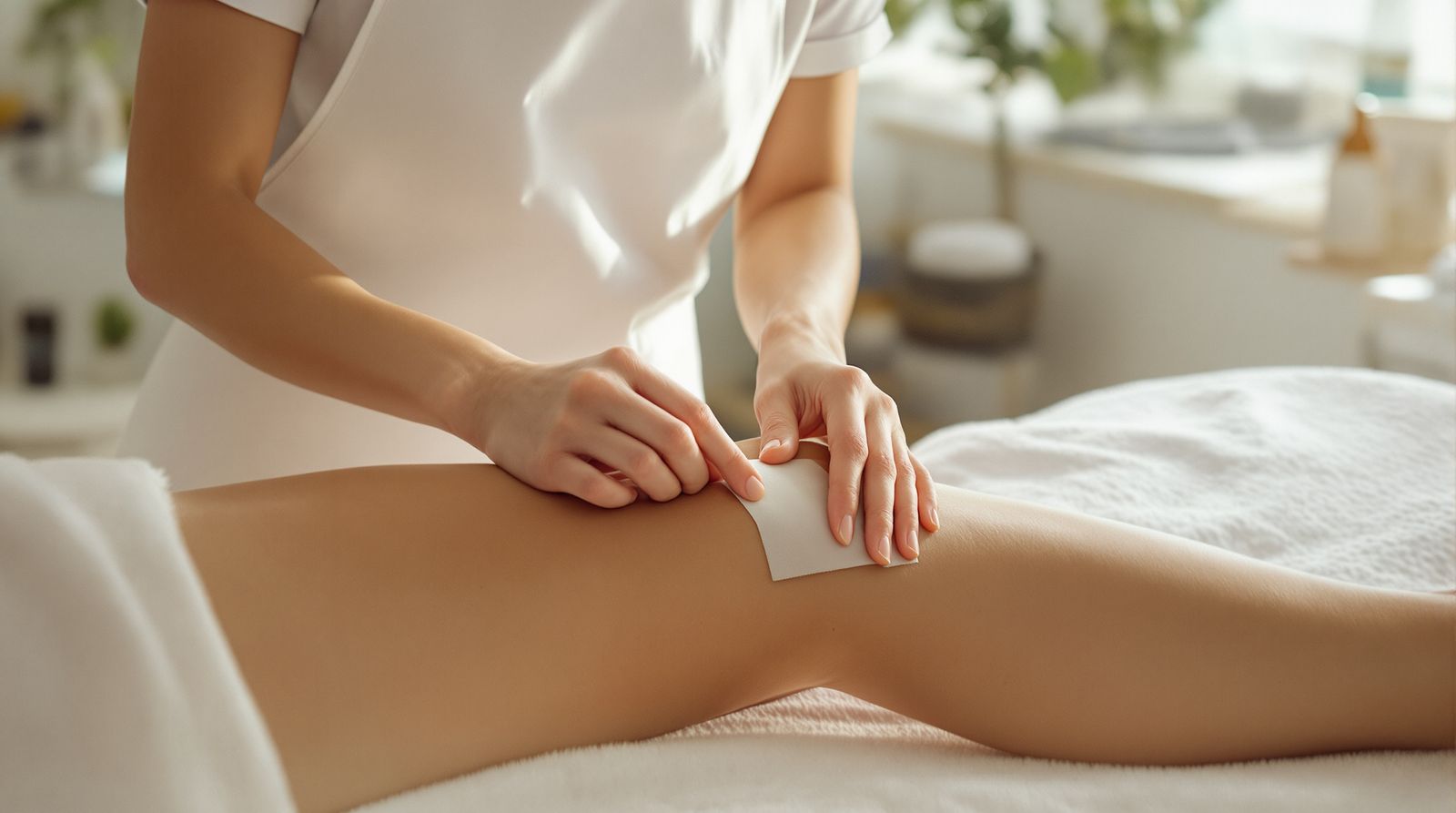
What the salon controls. Technique changes the odds before aftercare begins. Hair needs to be roughly a quarter inch long so the wax grips the shaft instead of snapping it. The strip should be pulled back parallel to the skin, against the growth direction, in one motion, since slow or upward pulls break hairs mid-shaft. Clean spatulas, no double-dipping, and taut skin during the pull all reduce breakage and follicle trauma. A practitioner who works quickly and asks about your skin is doing more for your ingrown risk than any product they sell at the counter (American Academy of Dermatology).
When waxing is the wrong tool. For skin that scars or darkens easily, or for anyone with the chronic razor-bump pattern of pseudofolliculitis barbae, repeated waxing can feed the cycle rather than break it, because every regrowth is a fresh chance to trap a curved hair (StatPearls, NCBI Bookshelf). If bumps follow every appointment despite good aftercare, the durable answer is usually reducing the hair at its source rather than switching salons.
The takeaway: waxing trades the shaving trap for a regrowth trap, and the outcome is decided by aftercare. Protect the follicles for two days, exfoliate gently for two weeks, insist on good technique, and treat waxing that keeps producing scarred or darkened bumps as a signal to change methods, not to try harder.
Related reading: Best hair removal methods for ingrown-prone skin.